
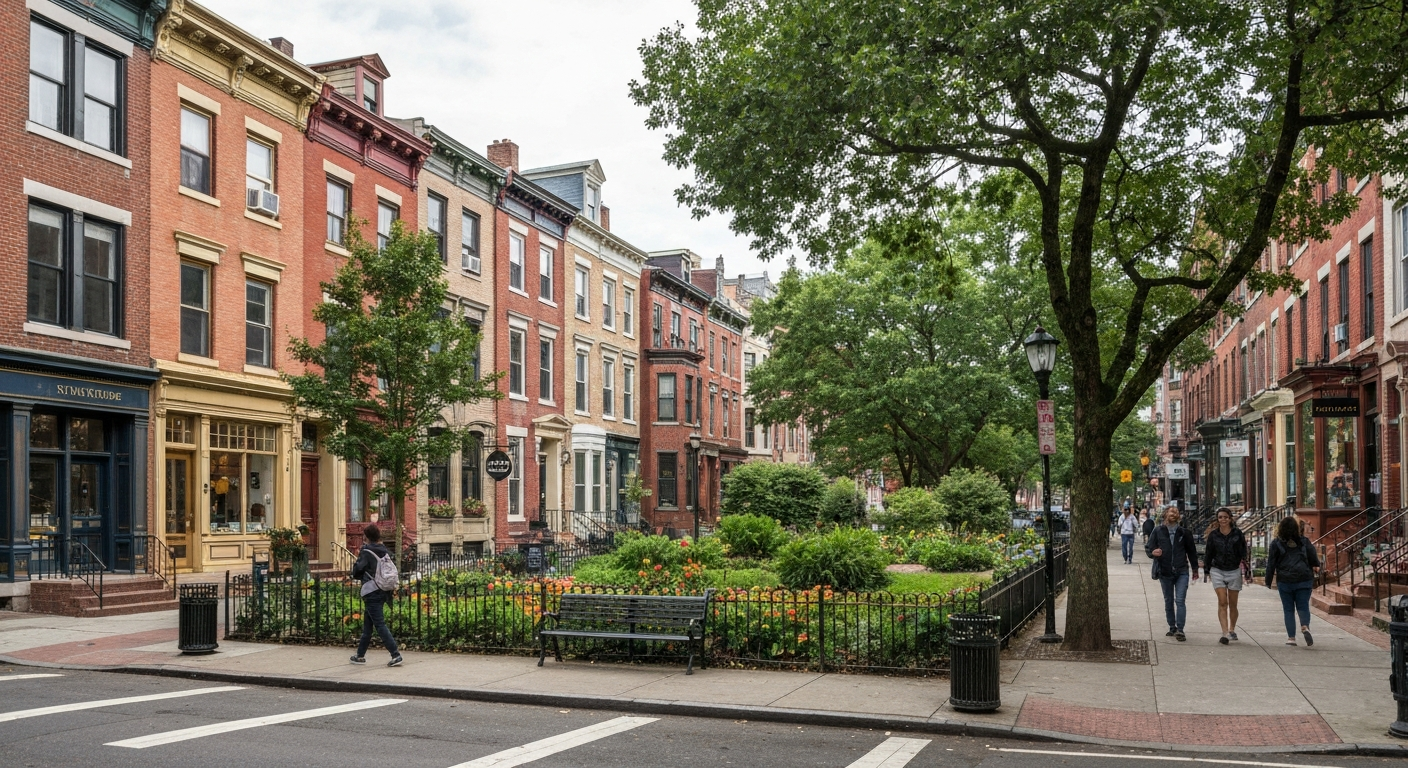
Fitler Square offers one of the most desirable residential experiences in Center City Philadelphia. With its historic rowhomes, tree-lined streets, and immediate access to the Schuylkill River Trail, it provides a quieter alternative to the bustling commercial corridors nearby. However, understanding the true cost of living in Fitler Square goes beyond the purchase price. Buyers, sellers, and relocating homeowners need to consider housing costs, property taxes, maintenance, transportation, and lifestyle expenses to make informed real estate decisions.
Housing Costs and Property Types
Housing is the most significant factor in the Fitler Square cost of living. The neighborhood is known for its historic brick rowhomes, classic brownstones, and select condominium buildings. Because inventory is often limited and buyer demand remains consistently high, property values here reflect a premium Center City location.
The type of property you choose directly impacts your monthly expenses. A historic rowhome offers classic charm and no monthly association fees, but owners are fully responsible for all exterior and interior maintenance. Alternatively, purchasing a condo in or near the neighborhood often means paying monthly condo fees that cover exterior maintenance, common areas, and sometimes utilities, which must be factored into your overall budget. For a broader look at the neighborhood's advantages and challenges, read our guide on the Pros and Cons of Living in Fitler Square, Philadelphia.
Property Taxes, Insurance, and Ownership Expenses
When evaluating the cost of living, property taxes are a critical component. Fitler Square properties are subject to the City of Philadelphia property tax assessments. Because home values in this premium neighborhood are generally higher than the citywide average, the resulting tax bills are proportionally higher. Buyers should always verify the current tax assessment of a specific property rather than relying on outdated online estimates.
Homeowners insurance is another necessary expense. Depending on the age of the home, its proximity to the river, and the type of construction, insurance premiums can vary. Buyers purchasing older homes should also budget for regular maintenance and potential updates, as historic properties often require specialized care for masonry, roofing, and aging systems.
Condo Fees and Maintenance Considerations
For those exploring condos in the Fitler Square area, understanding the condo association fees is essential. These monthly fees can range significantly based on the building's amenities, age, and the services provided. Buyers should carefully review the association's financial health and ask about any upcoming special assessments before making an offer.
If you opt for a traditional rowhome, you avoid condo fees but take on the full responsibility of maintenance. Budgeting an annual percentage of the home's value for unexpected repairs and routine upkeep is a smart financial strategy when owning a historic Philadelphia property.
Parking, Transportation, and Walkability
Transportation costs in Fitler Square depend heavily on your lifestyle. The neighborhood is incredibly walkable, meaning many residents can comfortably live here without owning a car. Daily errands, grocery shopping, and dining are all easily accessible on foot. For broader city travel, residents frequently use SEPTA buses and nearby transit options. For a detailed breakdown of getting around, explore our Fitler Square Walkability, Transportation and Neighborhood Guide.
For residents who do own a vehicle, parking is a notable expense. Street parking requires a residential permit, which is affordable, but finding an open spot can be highly competitive and time consuming. Many car owners choose to rent a dedicated space in a nearby parking garage, which adds a significant monthly cost to their living expenses.
Lifestyle Expenses and Local Conveniences
The Fitler Square lifestyle is built around local convenience and community amenities. Residents enjoy easy access to the Schuylkill Banks and local parks maintained by Philadelphia Parks & Recreation, which provide free outdoor recreation.
Dining and entertainment are major draws. The neighborhood features excellent local coffee shops, neighborhood cafes, and highly regarded restaurants. While there are options for various budgets, dining out in this premium area generally reflects Center City pricing. To learn more about local amenities, check out our guide to Fitler Square Restaurants, Shops and Things to Do.
How Fitler Square Compares to Nearby Neighborhoods
When researching the cost of living, it helps to compare Fitler Square to its neighbors. Fitler Square and Rittenhouse Square both occupy the premium tier of the Center City market. However, Fitler Square tends to offer a quieter, rowhome dominant environment, while Rittenhouse Square is known for luxury high rise condos and a bustling commercial core. For a comprehensive look at the differences, read our guide on Fitler Square vs Rittenhouse Square.
Graduate Hospital, located just to the south, often provides slightly more accessible entry points for buyers seeking rowhomes, though prices there have appreciated significantly in recent years. Society Hill offers a similar historic, residential feel on the east side of the city, often at comparable premium price points. University City, located across the river, presents a different market dynamic driven by major educational and medical institutions.
Cost Considerations for Buyers
Buyers targeting Fitler Square need to prepare for a competitive environment. It is crucial to get pre-approved early and understand your total monthly budget, including expected maintenance or parking costs. Working with a local expert can help you navigate block by block pricing variations and identify properties that align with your financial goals. For more buyer strategies, review our article on Buying or Selling a Home in Fitler Square.
Cost Considerations for Sellers
Sellers in Fitler Square benefit from strong buyer demand, but pricing a historic home correctly requires nuance. Overpricing can lead to extended days on the market, while underpricing leaves equity on the table. Sellers must consider the cost of preparing the home for sale, including potential repairs or staging, to maximize their return. For insights into current market conditions, read our Fitler Square Real Estate Market Update for 2026.
Cost Considerations for Downsizers
For homeowners looking to downsize into Fitler Square, the neighborhood offers an appealing walkable lifestyle. However, downsizers moving from larger suburban homes must adjust to smaller square footage, potential condo fees, and the realities of city parking. Evaluating whether to sell your current home first or buy your Fitler Square property first is a critical financial decision that requires careful planning.
How AI Helps Compare Options
Navigating the financial aspects of buying or selling in a premium neighborhood can be complex. SmartytheRealtor utilizes AI powered tools to help clients analyze market data, compare pricing strategies, and evaluate flexible selling options. Whether you are exploring a cash offer, considering a Fix and List approach, or trying to time your move perfectly, data driven insights provide clarity and confidence.
Smarty Perspective
Fitler Square delivers an exceptional urban lifestyle, but it comes with the financial realities of a highly desirable, historic Center City neighborhood. The key to a successful move here is understanding the complete financial picture upfront. By factoring in taxes, maintenance, parking, and lifestyle costs, you can make a real estate decision that supports both your daily life and your long term goals.
Explore More Fitler Square Guides
Frequently Asked Questions
Is Fitler Square an expensive neighborhood?
Fitler Square is generally considered one of Center City Philadelphia's premium residential neighborhoods. Housing costs often reflect its historic character, walkability, and proximity to Rittenhouse Square and University City.
Are property taxes high in Fitler Square?
Property taxes in Fitler Square follow the City of Philadelphia's tax assessments. While the tax rate is standard across the city, the higher property values in the neighborhood typically result in higher overall tax bills compared to more affordable areas.
Do homes in Fitler Square have HOA fees?
If you purchase a condo or a home within a managed community in Fitler Square, you will likely have monthly HOA or condo fees. Traditional historic rowhomes typically do not have HOA fees, but owners are responsible for all maintenance.
How much does parking cost in Fitler Square?
Street parking requires a residential permit, which is relatively inexpensive annually. However, because street parking is highly competitive, many residents choose to rent spaces in nearby garages, which can add a significant monthly expense.
Is Fitler Square more affordable than Rittenhouse Square?
Fitler Square and Rittenhouse Square share similar premium pricing tiers, but costs vary depending on the property type. Fitler Square often features more traditional rowhomes, while Rittenhouse Square has a higher concentration of luxury high-rise condos with substantial monthly fees.